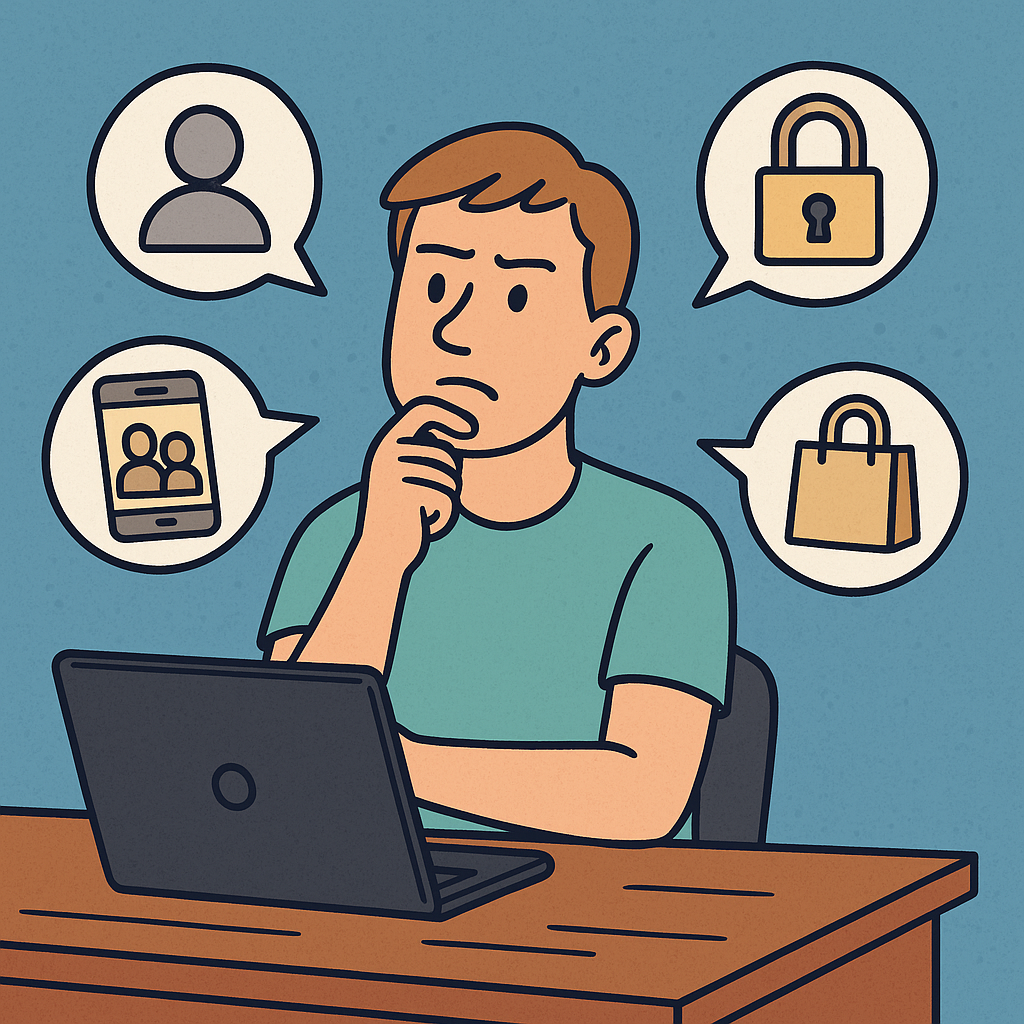
How private do you really need to be online?
Have you ever actually sat down and thought about everything you’re sharing?
Are you a social media influencer? A C-suite executive? A therapist? A teacher? Do you run a digital business or have someone in your life who’s a little too interested in you? What makes you a potential target?
These are the questions you should be asking yourself when thinking about your digital privacy. Who are you trying to hide or limit exposure from? Is it individuals, companies collecting and selling your data, or the giant tech platforms like Google and Amazon?
There’s no one size fits all answer, but there are a lot of situations where privacy matters more than people think.
Who Are You Hiding From?
That’s the first question to answer.
Most people assume no one would bother with them. That’s usually true; until it isn’t. The reality is that plenty of bad actors exist who are always looking for an easy target.
Let’s use a simple example.
You’re at the gym, and someone keeps staring at you. You ignore it and go on with your workout. Later, you post a photo with a friend and tag the gym. That same person searches the gym’s tagged photos on Instagram, finds your post, and lands on your public profile.
From there, they now have your username; maybe even your full name. They can see your friends, your hobbies, your pets, the restaurants you visit, even where you plan to be later that night from your stories. You don’t know who they are or what they want, but they now know a lot about you.
If that same person approached you at the gym, would you tell them the names of your family members, where you work, and what you’re doing this weekend? Probably not. Yet that’s exactly what happens online every day.
Today it’s just a stranger at the gym. Next time, it could be worse.
Awareness First
Everyone should have at least a basic understanding of what they’re sharing online and how accessible that information is.
Your address, phone number, and email are often listed publicly. Photos of you are scattered across social media. If you were on a sports team in school, there’s probably still a page with your name and photo on it. Wedding websites share full names, stories, and close friends. You tag your family, your location, your vacations. It all adds up.
It only sounds paranoid until something happens; identity theft, a hacked account, stolen photos, or even someone showing up uninvited. These things happen every day, and most of them can be avoided or made harder for the average person to pull off.
You’ll never be 100 percent private or anonymous, but you can control how much of your life is freely available to anyone who looks.
What You Can Do Right Now
Start small.
Set your social media accounts to private. If someone wants to see your content, you decide who they are.
Change usernames that include your real name or birth year.
Remove your information from data brokers and people search websites.
Use Google’s Results About You tool to monitor where your personal data appears.
These steps alone reduce your exposure more than most people ever will.
The Real Question
At the end of the day, it all comes down to this:
What information are you willing to share?
That answer will look different for everyone. The key is making sure you’re the one deciding; not the platforms, not the companies, and not the strangers watching from the sidelines.